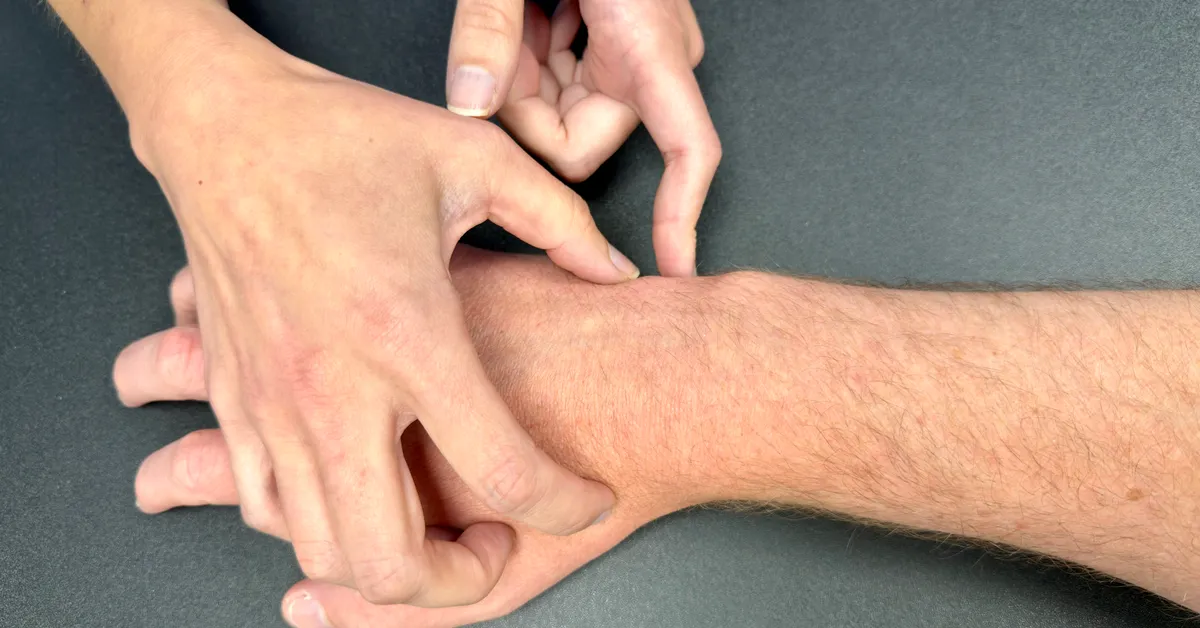
Pain on the ulnar-side of the wrist can come from any of several different structures, which makes it easy to mislabel and easy to misdiagnose. It can be put down to a simple sprain or assumed to be a TFCC injury. The reality is usually more nuanced. Getting the diagnosis right can make a real difference to how well treatment goes.
-
Pain on the little finger-side of the wrist, known as the ulnar-side, can come from several structures packed into a small area. These include the triangular fibrocartilage complex (TFCC), the joint where the two forearm bones meet (the distal radioulnar joint aka the DRUJ), the extensor carpi ulnaris (ECU) and flexor carpi ulnaris (FCU) tendons, small ligaments between the wrist bones, the ulnar-sided bones themselves and the ulnar nerve. Arthritis, repetitive strain and previous fractures can also be a source. Because so much sits in one place, a careful assessment is needed to identify which structure is responsible.
-
No. The TFCC is a common cause of little finger-sided wrist pain, but it is far from the only one. It is easy to assume a TFCC tear the moment this pain appears. Yet, most of the time the picture is not that simple and sometimes more than one structure is involved. A thorough history and a set of clinical tests are what separate a TFCC problem from the alternatives.
-
A sprain is a stretch or tear of a ligament and many wrist injuries are exactly that. The distinction that matters is how it behaves over time. Pain that settles within a couple of weeks is reassuring. Pain that lingers, a wrist that clicks, clunks, a feeling like it gives way or symptoms that flare when you twist or lean on the hand deserves a thorough examination rather than being left as just a sprain.
-
Twisting the forearm and bearing weight through the hand both load the ulnar-side of the wrist and the structures that stabilise it. Pain with wringing out a cloth, turning a key or door handle, opening a jar or pushing up from a chair is a common pattern with TFCC and distal radioulnar joint (DRUJ) problems. It is a useful clue, though it does not confirm the diagnosis on its own.
-
You could be right, but it is worth confirming. More people now arrive in clinic having already reached a diagnosis from an online search, a YouTube video, a social media platform or an AI tool. Sometimes it fits. Sometimes the same symptoms point to a different structure entirely. A self-diagnosis is a helpful starting point for a conversation, not a substitute for an examination.
-
Not always. Much ulnar-sided wrist pain, including many TFCC injuries, can be diagnosed clinically through a detailed history and specific provocative tests. Imaging such as X-rays, MRI or ultrasound is useful in certain cases, but it is not a routine first step and a scan is not always needed to begin the right treatment.
-
Yes. What looks like a single problem can mask a second one sitting alongside it. In the wrist, it happens more often than people expect. This is one reason a complete assessment matters. Treating only the obvious problem can leave a coexisting one behind and stall your recovery.
-
Consider a specialist assessment if pain on the little-finger side of the wrist has not settled within about two weeks, if the wrist clicks, clunks or feels unstable, if it hurts to twist or bear weight through the hand, if you have numbness or tingling or if it followed a fall or twisting injury. Early, accurate assessment tends to lead to a smoother recovery.
What is on the little-finger side of the wrist?
Ulnar-sided wrist pain is pain felt on the little-finger side of the wrist. It can arise from any of several structures packed into that small area. The side itself is called the ulnar-side, after the ulna, one of the two forearm bones.
It is a small and surprisingly crowded space. Packed into it are the triangular fibrocartilage complex (TFCC), a cushion of cartilage and ligaments where the ulna meets the wrist, the distal radioulnar joint (DRUJ) where the two forearm bones meet and rotate, the extensor carpi ulnaris (ECU) and flexor carpi ulnaris (FCU) tendons that run along the back and palm side of the wrist, small ligaments linking the wrist bones and the ulnar nerve as it passes into the hand.
Because so many structures sit so close together, pain here can come from any one of them. That is exactly why a careful assessment matters.
Why it is not always a TFCC injury
Pain on the little-finger side of the wrist is not always a TFCC injury. The TFCC is a well-known cause, so it is often the first thing that comes to mind. It is easy to jump straight to a TFCC tear. There is a great deal else that can go wrong on the ulnar-side of the wrist. Most of the time it is not one single thing.
More people now arrive at the clinic having already settled on a diagnosis, often TFCC, after an online search, a YouTube video, a post on a social media platform like TikTok or Instagram or a question put to an AI tool. Sometimes that fits. Just as often the same symptoms point somewhere else, which only a proper examination can tell apart.
Whether it came from a YouTube video, a social media platform like TikTok or Instagram or an AI assistant, arriving with an idea of what might be wrong is genuinely useful. It helps the conversation. It is worth holding it loosely though. The same symptoms on the ulnar-side of the wrist can come from several different structures. Pinning down the right one usually helps treatment go more smoothly.
But it is not just a sprain either
There is an opposite trap. Wrist pain can be brushed off as a simple sprain and left to settle on its own. A sprain, a stretch or tear of a ligament, is a real and common injury and sometimes that is precisely what it is.
One useful distinction is how the pain behaves. Pain that eases within a couple of weeks is often reassuring. Pain that lingers, clicks or clunks, makes the wrist feel like it gives way, or flares when you twist or bear weight deserves more than a wait-and-see label. Left too long, a specific and treatable problem can be missed. Our companion guide asks could it be more than a sprained wrist?
Possible causes of little finger-sided wrist pain
| Structure | What it is | Symptoms you might notice |
|---|---|---|
| TFCC | A cushion of cartilage and ligaments where the ulna meets the wrist | Pain on the little-finger side, often with clicking, made worse by twisting the forearm or bearing weight through the hand |
| Distal radioulnar joint (DRUJ) | The joint where the two forearm bones meet and rotate | Pain and a sense of instability when rotating the forearm or pushing through the wrist, sometimes with a clunk |
| ECU tendon | A tendon running along the back of the ulnar wrist | Pain or snapping along the back of the wrist that flares with movement and gripping |
| FCU tendon | A tendon running along the palm side of the ulnar wrist | Pain and tenderness along the palm side near the outer base of the hand, worse with wrist bending and gripping |
| Lunotriquetral ligament | A small ligament linking two wrist bones | Ulnar-sided pain and sometimes clunking, often following a fall onto the hand |
| Ulnar-sided bones | The ulna and nearby wrist bones | A deep ache that worsens with load, sometimes linked to bone length or a previous fracture |
| Arthritis | Wear or inflammation in the ulnar wrist joints | Aching, stiffness and swelling that build gradually over time |
| Ulnar nerve | The nerve passing into the hand on the little-finger side | Numbness or tingling in the little and ring fingers rather than pain alone, sometimes with a weaker grip |
This is not a checklist to diagnose yourself with. It is a picture of how much lives in one small space and why the label a set of symptoms first attracts is not always the right one.
Numbness, tingling and changes in the skin
Not everything on the ulnar-side of the wrist is about cartilage, ligaments, tendons or bone. The ulnar nerve and its sensory branches pass into the hand on the little finger-side. The ulnar nerve proper runs through a narrow space called Guyon’s canal. When the nerve is the source, the symptoms usually feel different. Numbness or tingling in the little finger and half of the ring finger tends to point to the nerve rather than a deep ache that comes on with twisting or loading. Some people also notice a weaker grip or clumsiness with fine tasks.
The skin can offer clues too. Changes in skin pliability, sensation or in the colour, temperature or texture of the skin over the little finger-side of the hand, can suggest a nerve or circulation issue rather than a joint problem. This is why a thorough assessment does not simply press on the sore spot. It checks sensation and the condition of the skin as well. It also asks the simple, but revealing question that is so easy to skip: where exactly is the numbness?
What a proper assessment looks at
A good assessment starts with the story, not the scan. Ms Razo will want to know how the pain began, whether there was a sudden trauma or if it crept in gradually, what makes it better or worse and exactly where you feel it. Small details regarding your symptoms in function help point to the structure involved.
That history is then paired with specific clinical tests, including movements that load and rotate the wrist and checks of how stable the joint between the forearm bones feels. Much ulnar-sided wrist pain, including many TFCC injuries, can be diagnosed this way without needing an MRI. Imaging is used when it will change the plan, not as a routine first step.
Can more than one thing be going on?
Sometimes, yes. What presents as a single problem can hide a second one sitting alongside it. In the wrist, these can happily live together. It is one of the main reasons a complete assessment is worth having. In practice, Ms Razo will often find a second contributor to the pain once the most obvious one has been identified. Treating only the obvious problem while a coexisting one goes unnoticed is a common reason recovery stalls.
When to see a specialist about wrist pain
Consider a specialist assessment if pain on the little finger-side of your wrist:
- Has not settled within about two weeks
- Clicks, clunks or makes the wrist feel unstable or like it gives way
- Flares when you twist the forearm or bear weight through the hand
- Comes with numbness or tingling into the hand
- Followed a fall or a twisting injury
- Is affecting grip, work or everyday tasks
Wrist pain assessment in Belfast
Ms Razo specialises in the diagnosis and non-operative management of wrist pain, including the many causes of ulnar-sided pain. A thorough assessment aims to identify the structure or structures involved, so treatment can be directed at the correct target. This reflects a wider principle in her practice: not stopping at the first obvious answer, but stepping back to consider the whole wrist and the arm above it, an idea she describes as proximity blindness.
If you have wrist pain that is not settling, book a consultation or contact the clinic to discuss your symptoms.