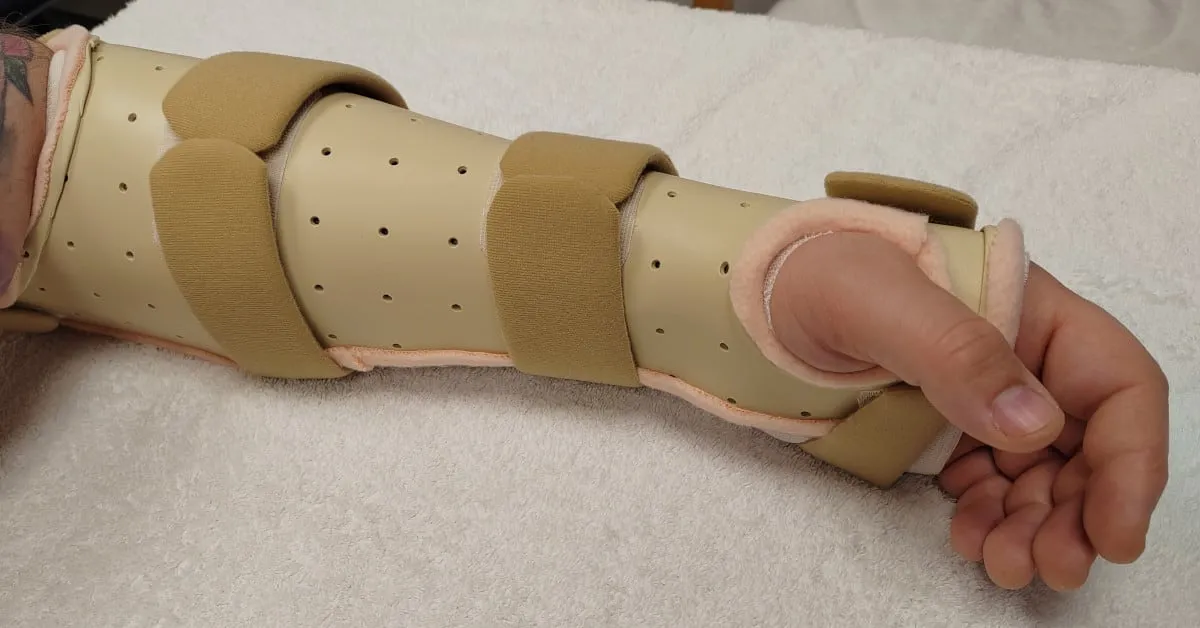
A custom thermoplastic splint is moulded to your hand or wrist in clinic and plays an important role in your recovery. Whether it is protecting a healing structure, correcting a position or supporting rehabilitation after surgery, how you care for it matters. This guide covers wearing schedules, cleaning, hand hygiene, skin care, what to do if something feels wrong and how much a custom splint costs.
-
A custom, thermoplastic hand splint in the UK can cost between £15 and £80 depending on the size. A splint for a mallet finger might be as low as £15, while a splint covering the forearm might be as much as £80. The cost covers the materials, fabrication and fitting. Costs do vary between clinics and locations, so it is worth checking with your provider. Some private medical insurers will also cover splint costs, but coverage varies between policies. At The Hand Therapist in Belfast, splints cost between £15 to £50 and are charged separately from your appointment fee. Any subsequent adjustments to your splint are free of charge at any time. See the full fee schedule.
-
Yes. Your therapist will set a wearing schedule for you. If they have allowed you to remove the splint, take it off, wash and dry your hand thoroughly, then put the splint back on. If you are on a full-time wearing schedule, wipe the exposed skin, thumb and fingers with a damp cloth or baby wipe and dry them before reapplying the splint.
-
The splint can be removed before showering or bathing only if your therapist allows it. A splint wearing schedule should be set by your Hand Therapist. If it needs to be on full-time, keep it dry and covered. For larger splints, a carrier bag secured with tape works well. For smaller hand or finger splints, a Ziploc style bag secured with tape is a good choice. Do not submerge the splint in water or allow it to get wet.
-
Wipe the inside and outside of the splint with a damp cloth or sponge using mild soap and cool water. Rinse off any soap residue and allow the splint to dry fully before wearing it again. Never use hot water, a dishwasher or dry it on a radiator as the thermoplastic can soften with heat and the shape may distort. An antibacterial wipe can also be used for cleaning.
-
Your therapist will advise a wearing schedule based on your condition. Common schedules include night only, daytime use, full-time or during specific activities. Follow the schedule you have been given. If it is difficult to stick to, discuss this with your therapist rather than adjusting it yourself.
-
No, not without checking with your therapist first. Improvement is often a sign that the splint is working. Stopping too soon can allow symptoms to return. Your therapist will advise when it is appropriate to reduce or stop wearing the splint based on your progress and healing.
-
Some mild settling-in discomfort is normal in the first few days. Contact your therapist or clinic promptly if you experience persistent pain, numbness, redness, blistering, pins and needles or a significant change in swelling. Thermoplastic splints can quickly be adjusted.
-
No. Never try to reshape your splint at home by applying heat. Thermoplastic material softens with heat, and attempting to adjust it yourself risks altering the fit or losing the corrective position. If your splint needs adjusting, contact the clinic and it can be modified.
How to put your splint on
A splint will have been fitted at your appointment and fabricated to position your hand or wrist precisely. When putting it on:
- Slide your hand into the splint in the correct position as shown to you
- Secure the straps firmly enough to hold the splint in place without cutting in or causing discomfort
- The splint should feel supportive and comfortable. It should not feel tight or press on any bony area
- If your splint has a specific position it needs to hold your wrist or fingers in, make sure that position is achieved before fastening the straps
- Check you can move any joints not held by the splint and that your hand maintains its normal colour
If you are unsure whether your splint is on correctly, contact the clinic and we can advise and check it.
When to wear your splint
Your therapist will have advised you on when to wear your splint. Common wearing schedules include:
- Night only: for conditions such as carpal tunnel syndrome and arthritis, where the aim is to hold the wrist or hand in a comfortable position during sleep
- Daytime use: for support during work, sport or daily tasks
- Full-time: following surgery or acute injury, where the healing structure needs consistent protection
- During specific activities only: for some conditions, wearing the splint during certain tasks helps manage symptoms without limiting function at other times
Wearing your splint for less time than advised may slow your recovery. If you are finding the schedule difficult to stick to, let your therapist know so they can discuss this with you.
Cleaning your splint
Thermoplastic orthoses can be cleaned easily with mild soap and cool water. Use a damp cloth or sponge to wipe down the inside and outside of the splint. Rinse off any soap residue and allow the splint to dry fully before wearing it again. An antibacterial wipe can also be used. Aim to wipe the inside of the splint at least once a day and more often in warm weather or after activity.
The straps and padding can be wiped down in the same way. If the padding becomes worn, or the Velcro straps lose their grip, contact the clinic for replacement parts.
Do not put your splint in hot water, a dishwasher or near a source of direct heat such as a radiator or in a car on a hot day. Thermoplastic material is designed to soften with heat. This is what allows it to be moulded to your wrist or hand. Exposure to heat when you are not wearing it may distort the shape.
Skin care while wearing your splint
Wearing a splint for extended periods can make the skin underneath warm and damp. To keep your skin comfortable:
- Your therapist will set a wearing schedule for you. If allowed, remove your splint for short periods during the day to air the skin
- Wash and dry the skin under the splint gently, but thoroughly when you remove it
- Moisturise the skin regularly. Dry or cracked skin can become uncomfortable under a splint
- Do not apply thick creams or oils immediately before putting the splint on, as this can make the skin slippery and affect the fit
When you remove the splint, check for any red marks on the skin. Light marks are normal and should fade within 20 to 30 minutes. If marks persist or the skin is indented, the splint may need adjusting.
If you notice any skin irritation, redness, blistering or breakdown under the splint, remove it and contact the clinic.
Keeping your hand clean while wearing a splint
To keep your hand clean while wearing a splint you can wipe the exposed skin with a damp cloth or baby wipe. The key is to keep the splint dry and clean your skin whenever you have the opportunity.
- Hand washing: if your therapist has allowed you to remove the splint, take it off, wash and dry your hands thoroughly, then put the splint back on. If you are on a full-time wearing schedule, wipe the exposed skin with a damp cloth or baby wipe and dry them before reapplying the splint
- Showering: only remove the splint before showering or bathing if your therapist allows it. A splint wearing schedule should be set by your Hand Therapist. If you need to keep it on, it should be maintained covered and dry
- If the splint gets wet: pat it dry with a towel and allow it to air dry fully before wearing it again. Do not use a hairdryer or place it near a heat source
- Hand sanitiser: alcohol-based hand sanitiser can be used on any exposed areas. Avoid letting it run under the splint where it may irritate the skin or moisten padding
For larger splints, a carrier bag secured with tape works well. For smaller hand or finger splints, a Ziploc style bag secured with tape is a good choice.
What to do if your splint feels uncomfortable
Some mild settling-in discomfort is normal in the first day or two of wearing a new splint. However, contact the clinic promptly if you experience:
- Persistent pain, pressure or numbness in any area under the splint
- Redness, blistering or broken skin
- Tingling or pins and needles that do not resolve when you remove the splint
- The splint digging into a bony prominence such as the wrist bones or knuckles
- A significant change in swelling that makes the splint feel too tight or too loose
If any of these apply, contact the clinic on +44 (0)28 9099 3464 or book an appointment.
Thermoplastic splints can be adjusted quickly in clinic. Never try to reshape the splint yourself at home by applying heat. This risks altering the fit or losing the corrective position.
Storing your splint
When you are not wearing your splint, store it somewhere cool and away from direct sunlight or heat. Leaving it on a car dashboard, near a radiator or in a hot room risks distorting the shape.
A clean cloth bag is ideal. Avoid crushing or bending the splint when storing it. Keep it out of reach of dogs and other pets as they can be prone to chewing or tearing up thermoplastic splint.
Reducing and stopping splint wear
Your therapist will advise you on when it is appropriate to reduce or stop wearing your splint. This decision is based on your progress, your symptoms and the healing of the underlying condition. Do not stop wearing your splint early because symptoms have improved. Improvement is often a sign that the splint is working and stopping too soon can allow symptoms to return.
Your splint at The Hand Therapist, Belfast
Ms Michelle Razo is a Certified Hand Therapist (CHT) and Registered Occupational Therapist providing specialist Hand Therapy in Belfast. All custom thermoplastic splints are fabricated and moulded to the patient in clinic during the appointment. If your splint needs adjusting at any point, this can be done in clinic at no additional charge. Replacement straps and padding are also available, if required.
If you have any questions about your splint, your wearing schedule or how your treatment is progressing, contact the clinic or raise them at your next appointment.