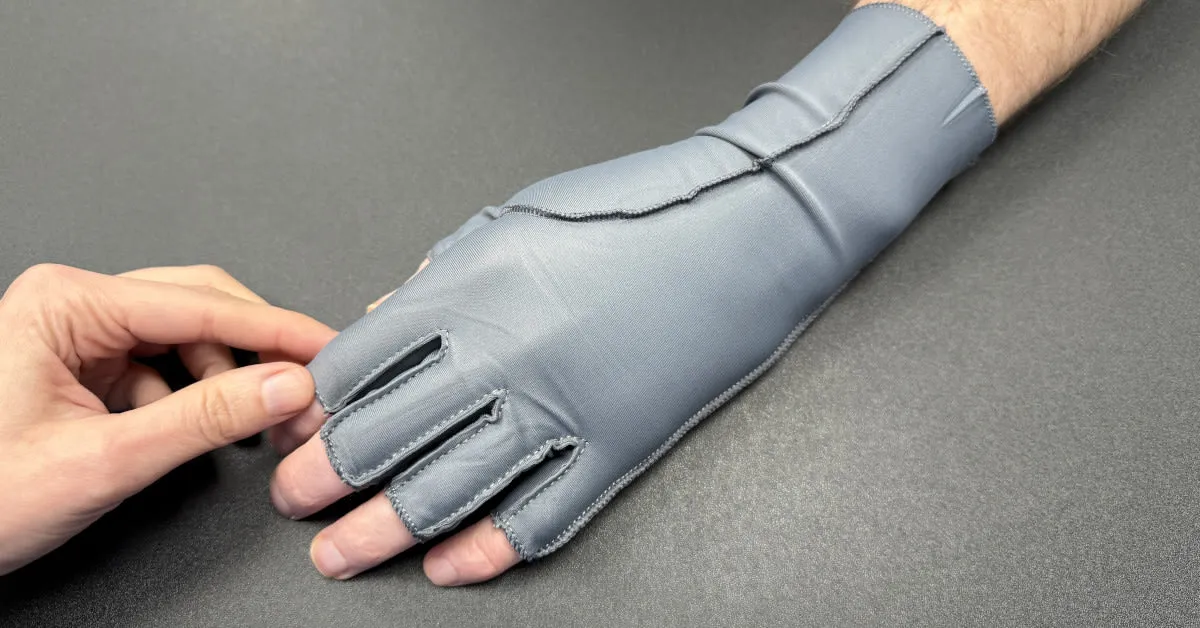
Swelling in the hand and wrist, known clinically as oedema, is one of the most common issues following injury, surgery or inflammatory conditions. While some swelling is a natural and expected part of the healing process, unmanaged swelling causes pain, limits movement and can lead to stiffness that is difficult to resolve later. Active swelling management from an early stage is one of the most important things you can do to support your recovery.
-
Some swelling is expected for the first two to six weeks after hand or wrist surgery and typically peaks in the first few days. Managed early with elevation, gentle active movement and, where indicated, compression, it usually settles steadily. Swelling that persists beyond six weeks should be reviewed, as it may mean something is restricting normal drainage or that the hand is being protected too much.
-
Fluid accumulates in the hand through the day under the influence of gravity, particularly if the hand has been hanging by your side during waking hours. Evening swelling is common and usually settles overnight with elevation. If your hand is consistently very swollen by the evening, you may benefit from more frequent elevation breaks, compression during the day or a review of how you are using the hand.
-
No. It is not appropriate for everyone, for example where there are certain skin conditions, fresh wounds, reduced circulation or some nerve conditions. The wrong garment can do more harm than good. This is why your therapist assesses whether compression suits your situation before recommending a type and strength, rather than reaching for it as a default.
-
Gentle active movement of the fingers is one of the most effective ways to reduce hand swelling, because muscle contraction pumps fluid out of the tissues. Forceful gripping or heavy use of the hand is usually avoided during a phase of significant swelling, as it can drive inflammation. If you have been given a specific exercise programme, follow it closely.
-
The reassuring pattern is swelling that is worst in the first few days then eases as the days pass. The pattern to act on is the opposite. Swelling that builds rather than settles, that arrives suddenly with heat, colour change or a sharp rise in pain. That can signal infection or a blood clot and needs prompt medical assessment rather than waiting until your next appointment.
Why swelling matters
Swelling occurs when fluid accumulates in the tissues. After an injury or operation, the body releases inflammatory factors to the area as part of the healing response. This is normal and necessary. However, if inflammatory fluid is not moved on in normal-time it can become sticky and begin to form scar-like adhesions in the soft tissues. This makes the hand stiff and can restrict the gliding of tendons and joints.
Managing swelling early makes movement easier, reduces pain and helps prevent stiffness.
Elevation: the most important step
The single most effective thing you can do to reduce hand and wrist swelling is to keep your hand elevated above the level of your heart. Gravity assists the drainage of fluid from the hand back towards the body.
Aim to keep your hand elevated as much as possible, particularly in the first one to two weeks after injury or surgery. For exploring practical ways to do this, speak to your therapist.
Rest your forearm and hand on a stack of pillows so the hand sits higher than your elbow and your elbow higher than your shoulder. At night, a pillow alongside you keeps the hand supported above heart height while you sleep.
A sling holds the elbow bent and the arm low across the body, which keeps the hand below heart height and does little to help swelling. Worn for long periods it can also lead to stiffness in the elbow and shoulder that then needs treating in its own right. Unless your therapist or surgeon has specifically asked you to wear one, support the arm in elevation on pillows rather than in a sling.
Active movement: keep the fluid moving
Gentle, active movement of the fingers is one of the most effective ways to pump fluid out of the hand. The muscles act as a pump, moving fluid through the circulatory system. Movement does not need to be forceful to be effective.
If your therapist has given you a specific exercise programme, follow it closely. Even small movements help. The pumping action is more important than the range achieved.
Avoid gripping, squeezing or forceful use of the hand during periods of significant swelling. Always checks with your therapist. Forceful use can increase inflammatory activity and make the swelling worse.
Massage
Gentle massage, called retrograde massage, helps move fluid from the hand and fingers back towards the body. You can discuss the most appropriate technique for completing retrograde massage with your therapist.
Cold therapy
In the early stages after injury or surgery, applying a cold pack to the hand and wrist can help reduce pain and limit swelling. After this initial phase, contrast bathing, alternating between warm and cool water, can help stimulate circulation and reduce chronic swelling. These modalities can cause skin damage or burns. It is therefore recommended you seek advice from your therapist to use these techniques safely.
Never apply a cold pack directly to bare skin. Wrap it in a thin towel or pillowcase, limit it to short periods and check the skin regularly. Cold therapy is not suitable for everyone, including some people with reduced sensation or circulation, so check with your therapist first.
Compression
Light compression can help control swelling in the wrist, hand and fingers. Tubular bandage, cohesive bandage or a light compression glove, if recommended by your therapist, can assist in moving fluid out of the hand during activity and rest.
Compression therapy should never cause discomfort, restrict movement or change the colour of your fingers. Your therapist will advise you on whether compression is appropriate for your condition and, if so, what type and how much.
Swelling management techniques at a glance
| Technique | When it helps most | Practical tip |
|---|---|---|
| Elevation | Any stage, most important in the first weeks | Keep the hand above the level of the heart |
| Active movement | All stages, including early after surgery | The pumping action matters more than the range achieved |
| Retrograde massage | After the acute phase | Gentle strokes from the fingers towards the body |
| Cold therapy | First 48 to 72 hours after injury or surgery | Wrap the pack and avoid direct contact with skin |
| Contrast bathing | Persistent or chronic swelling | Only after the acute phase, with therapist advice |
| Compression | Activity, rest and persistent swelling | Should never cause discomfort or colour change in the fingers |
What to watch for
Some swelling after injury or surgery is expected and is not a cause for alarm. However, contact the clinic or seek medical advice if you notice:
- Swelling that is increasing rather than settling over the first few days
- The hand becoming hot, red or discoloured
- A significant increase in pain alongside increased swelling
- Numbness or tingling that does not resolve with elevation
- Any signs of wound infection if you have had an open injury or surgery
Swelling that persists beyond the expected timeframe should be reviewed. If your swelling is not improving at the rate expected, your therapist will assess why and adjust your management plan accordingly.
If you have any questions about managing your swelling or are unsure whether your recovery is progressing as expected, please contact the clinic or raise your concerns at your next appointment.