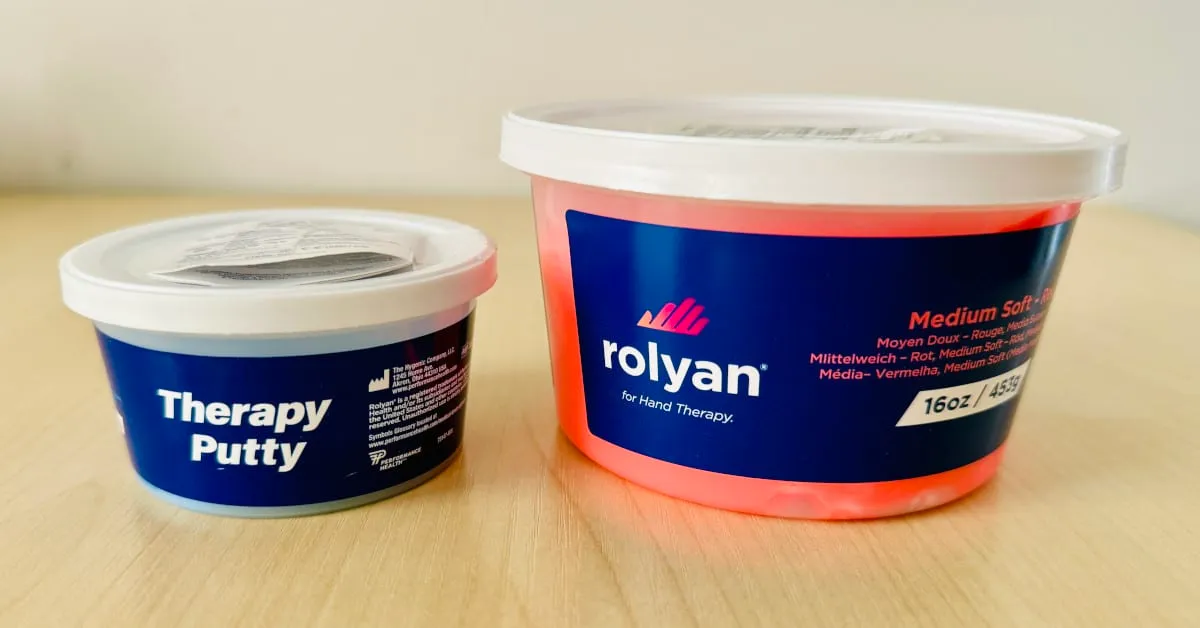
Therapy putty is a silicone-based rehabilitation tool used in Hand Therapy to rebuild grip strength, improve finger movement and develop hand dexterity. It is colour-coded by resistance across six standard grades from extra soft to maximum. This guide covers how to use therapy putty correctly, the resistance levels, common exercises and when to progress.
-
There are several reputable therapy putty brands used in clinical practice including Rolyan TheraPutty, CanDo, AliMed, JFA Medical and Meglio. Each manufacturer has a slightly different feel, texture and resistance at the same colour grade. A red from one brand may not feel the same as a red from another. Your Hand Therapist will supply therapy putty or recommend a brand based on your condition.
-
Therapy putty is colour-coded from softest to firmest. The standard colours are tan (extra soft), yellow (soft), red (medium), green (firm), blue (extra firm) and black (maximum resistance). Some therapy putty brands manufacture other colour ranges, which may include a range of different tones.
-
Most home programmes involve two to three short sessions per day rather than one long session. Consistency matters more than intensity. Ten minutes twice a day, every day, will produce better results than an hour once a week. Your Hand Therapist will prescribe a specific programme based on your current strength and the stage of your recovery.
-
Your Hand Therapist will prescribe the exercises most appropriate for your condition. Common exercises include full grip squeeze, finger spread, pinching, pulling and finger straightening. Work through the full range of motion slowly and with control rather than fast, forceful movements.
-
Yes, at the appropriate stage of recovery. Therapy putty can be used to rebuild grip, pinch and finger strength during tendinitis rehabilitation. However, the timing and resistance level must match your stage of healing. Using therapy putty too early or at too high a resistance can aggravate symptoms. Your Hand Therapist will advise when it is appropriate to introduce therapy putty exercises into your programme.
-
You are generally ready to progress when you can complete your full programme comfortably and without fatigue at your current resistance. Do not progress without checking with your Hand Therapist first, particularly if you are in the early stages of recovery after surgery or injury.
-
Therapy putty is a specially formulated silicone-based material designed for hand rehabilitation. It is non-toxic, latex-free and designed to maintain its resistance over extended use. It should be kept in a sealed container when not in use to prevent it drying out and kept away from fabric.
-
Keep therapy putty in its original container or a sealed bag when not in use. Keep it away from hair, fabric and carpet as it can be difficult to remove from fibres. Wash your hands before and after use. If the therapy putty becomes hard, dry or crumbly it is definitely time to replace it.
-
Therapy putty can soften over time with heavy use or exposure to heat. Placing it in the fridge for 20 to 30 minutes can temporarily firm it up. If the putty has permanently lost its resistance, it is time to replace it. Contact your clinic or use your favourite marketplace for a new supply.
Understanding the resistance levels
Therapy putty is colour-coded by resistance, with six standard grades ranging from extra soft (tan) to maximum resistance (black). Yellow and red are the most commonly used resistance levels, with patients typically progressing through to green and then blue as strength improves. The exact colours and feel can vary between manufacturers, for example a red therapy putty from one brand may not feel the same as a red putty from another. Your therapist will recommend or supply a specific brand based on your condition. Reputable brands used in clinical practice include Rolyan TheraPutty, CanDo, AliMed, JFA Medical and Meglio. The table below shows the standard progression from softest to firmest.
| Colour | Resistance | Typical use |
|---|---|---|
| Tan / beige | Extra soft | After surgery or for very weak hands |
| Yellow | Soft | Early rehabilitation and gentle strengthening |
| Red | Medium | The most commonly prescribed resistance for general hand strengthening |
| Green | Firm | More advanced strengthening |
| Blue | Extra firm | High baseline strength or later stages of rehabilitation |
| Black | Maximum | Grip and pinch strength in working hands |
Your therapist will prescribe a specific resistance based on your current strength and the stage of your recovery. Start with the resistance you have been given, even if it feels easy at first. Progressing too quickly to a harder putty before the tissue is ready can aggravate your condition.
Do not progress to a harder resistance without checking with your therapist first, particularly if you are recovering from surgery or a significant injury.
How to use therapy putty
Warming up the putty
Therapy putty performs best when warm. Before you begin your exercises, knead the putty gently in both hands for a minute or two to warm it up. This makes it easier to work with and reduces the effort required at the start of your session.
General principles
- Work through the full range of motion available to you at each repetition
- Move slowly and with control — fast, forceful movements are less effective than slow, deliberate ones
- Rest for a few seconds between repetitions if your hand feels fatigued
- Stop if you experience sharp pain — mild muscle tiredness is expected but pain is not
Common exercises
Common exercises include full grip squeeze, finger spread, pinching, pulling and finger straightening. Work through the full range of motion slowly and with control rather than fast, forceful movements. Your therapist will prescribe and demonstrate the exercises most appropriate for your condition.
How often should I exercise?
Your therapist will have given you a specific programme with sets and repetitions. As a general guide, most home programmes involve two to three short sessions per day rather than one long session. Frequent, shorter sessions are more effective than occasional long ones for building strength and motor patterns.
Consistency matters more than intensity. Ten minutes twice a day, every day, will produce better results than an hour once a week.
Caring for your putty
Therapy putty lasts well if looked after. Keep it in its original container or a sealed bag when not in use, as exposure to air over time can dry it out slightly. Keep it away from hair, fabric, carpet or sofas, as putty can be difficult to remove from fibres. Wash your hands before and after use.
Do not mix different resistance levels together, as this changes the resistance unpredictably.
If the therapy putty becomes hard, dry or crumbly, it will be time to replace it. Contact the clinic if you need a new supply.
When to progress
Your therapist will advise you when to move to the next resistance level. As a general guide, you are ready to progress when you can complete your full programme comfortably and without fatigue at your current resistance. Do not progress without checking with your therapist first, particularly if you are in the early stages of recovery after surgery or a significant injury.
If you have any questions about your therapy putty programme or are unsure whether you are doing the activities and exercises correctly, raise them at your next appointment or contact the clinic.