Wrist Injury Specialist, Belfast
TFCC Injury
Treatment
Pain on the little finger side of your wrist. Clicking, clunking or a feeling of the wrist giving way.
- Pain when gripping or twisting
- Weakness in the wrist
- Wrist stiffness or loss of movement
- Pain that won't settle after a fall or injury
These are the hallmark signs of a TFCC injury, one of the most common causes of ulnar-sided wrist pain.
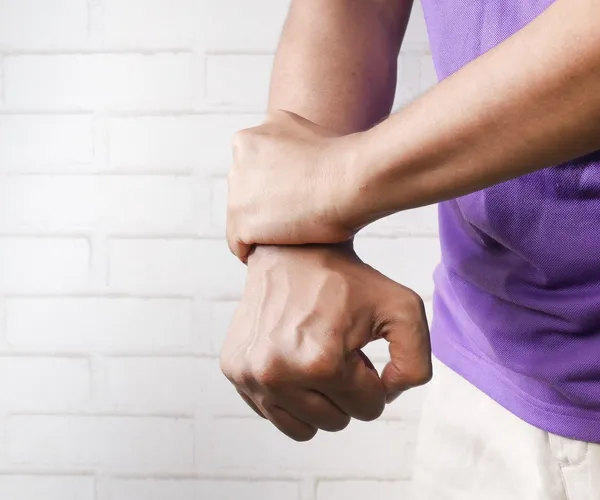
Many TFCC injuries can heal without surgery when the right treatment is prescribed. Ms Razo has a proven track record of rehabilitating TFCC injuries and teaches the subject to Hand Therapists internationally.
Hand Therapy
for TFCC Injuries
- Specialist TFCC Injury diagnosis
- Avoid expensive TFCC MRI imaging
- Evidence-based TFCC treatment protocols
- Bespoke TFCC and painful wrist rehabilitation programmes
- Return to sport and work faster
- Post-surgical Wrist and TFCC repair rehabilitation
Ms Razo is a Consultant Hand Therapist and Certified Hand Therapist (CHT) providing specialist TFCC diagnosis, treatment and rehabilitation in Belfast. She has successfully treated TFCC injuries both in-person and via virtual appointments.
Ms Razo is one of the few Certified Hand Therapists in the UK with specialist expertise in TFCC diagnosis and rehabilitation.
TFCC injuries can be complex to diagnose and treat. Ms Razo is passionate about demystifying this condition and has a proven track record of favourable outcomes, even when previous treatment elsewhere has not worked.
What does treatment look like?
- Protection and pain management Immobilisation if required, activity modification and pain management to allow the injured tissue to begin healing.
- Rehabilitation Progressive exercises, grip strengthening and movement restoration. Progress depends on compliance with your home programme and splint-wearing schedule.
- Return to activity Graded return to sport, work and daily activities. Timelines vary depending on injury severity and how consistently the rehabilitation programme has been followed.
No referral needed.
Self-refer directly to Ms Razo.
Registered provider with BUPA and H3
Book a ConsultationOr call +44 (0)28 9099 3464
Understanding TFCC injuries
TFCC stands for Triangular Fibrocartilage Complex. It is a critical structure on the ulnar (little finger) side of the wrist that stabilises the distal radioulnar joint (DRUJ), supports load transfer through the wrist and provides a smooth surface for wrist rotation. TFCC injuries are one of the most common causes of ulnar-sided wrist pain, yet they are frequently misdiagnosed as a simple wrist sprain.
TFCC injuries are divided into traumatic (Type 1) and degenerative (Type 2) lesions. Traumatic injuries commonly result from falls, rotational injuries and racquet sports. Degenerative lesions develop gradually with wear, tear and age. The sooner a TFCC injury is properly identified, the better the outcome and you can return to the sport you enjoy.
TFCC Injury Diagnosis
Accurate diagnosis is essential as the type and severity of the tear determines the treatment approach. Ms Michelle Razo is a specialist who can diagnose a TFCC injury at your first appointment through a series of tests without the need for expensive imaging. Many patients are referred for MRI scans before being assessed clinically. In many cases, a confident diagnosis can be reached through hands-on assessment alone.
Common signs and symptoms
- Pain on the little finger side of the wrist, often deep within the joint
- Pain reproduced by forearm rotation, particularly when gripping or loading the wrist
- A clicking, clunking or snapping sensation with wrist rotation
- Weakness of grip, especially when the forearm is in rotation
- Instability: a feeling of the wrist giving way
- Wrist pain on the little finger side that is not improving
- Clicking or clunking with wrist rotation
- Pain after a fall or twisting injury that was dismissed as a sprain
- Grip weakness affecting work, sport or daily activities
TFCC injuries are frequently underdiagnosed. A specialist assessment can confirm whether the TFCC is the source of your pain. Book a consultation
Not based in Northern Ireland? Virtual appointments available UK-wide.
Ms Razo provides specialist TFCC assessment, diagnosis and rehabilitation via secure video consultation. The same clinical expertise, without the travel.
What patients say
"I basically seen a number of Physios, osteo and had an MRI — nobody really gave me a solution. From day 1 with Michelle I felt like this was different. She specialises in only the hand to shoulder area and was confident she could get me sorted. She is a true specialist, a very good listener and goes the extra mile."
Craig B · TFCC/ECU wrist injury
"Getting nowhere with the NHS, finding Michelle's clinic was exactly what I needed. She has shown kindness, patience and a real commitment throughout, going far above and beyond."
RockNRollChops · Wrist pain & TFCC tear
"Michelle uncovered that my wrist pain was a TFCC injury and was knowledgeable about how this also affected muscles right up my arm into the bicep, shoulder and chest. With a regularly updated programme of exercises and soft tissue massages I am happy to be getting back into yoga again pain free."
Kaity H · TFCC wrist injury (yoga)
Frequently asked questions
-
No. You can self-refer directly. No GP letter or consultant referral is needed. If you have existing imaging such as an MRI, it is helpful to bring it along to your first appointment.
-
An initial consultation with Ms Razo is £86 for 60 minutes. Follow-up sessions are £66 for 45 minutes. If a wrist support or splint is required, prices start from £30 depending on the type. Ms Razo is a registered provider with BUPA and H3.
-
Yes. Ms Razo successfully treats TFCC injuries via virtual appointments for patients who cannot attend in person. Tele-rehabilitation allows for assessment, exercise prescription and ongoing management remotely. Find out more about virtual Hand Therapy appointments.
-
When non-operative treatment is elected, TFCC healing can take up to 3 months. Recovery following surgical repair is longer, with wrist immobilisation for 4 to 6 weeks post-operatively and a full rehabilitation programme lasting up to 6 months.
-
Yes. Contrary to the traditional view that TFCC injuries require surgical intervention, evidence supports that many TFCC tears can heal non-operatively when the appropriate healing environment and treatment protocol is prescribed. Ms Razo has a proven track record of successfully rehabilitating TFCC injuries without surgery.
-
Yes. Without appropriate treatment, a TFCC tear can progress with activities of daily living such as carrying shopping bags or weight-bearing through the wrist, leading to chronic ulnar-sided wrist pain, distal radioulnar joint (DRUJ) instability and further degenerative change.
-
No. TFCC tears are soft tissue injuries and are not visible on X-ray. MRI is the gold standard imaging investigation for diagnosing TFCC tears. However, there are well-established clinical provocation tests, supported by research, that can differentially diagnose a TFCC tear during a specialist Hand Therapy assessment without imaging.
-
Yes. TFCC tears are a significant soft tissue injury that causes pain, reduces grip strength and affects wrist function. The TFCC stabilises the distal radioulnar joint (DRUJ), so damage to this structure can have a meaningful impact on daily activities, work and sport if not properly managed.
-
The evidence for steroid injections as a standalone and effective treatment for TFCC injuries is limited. Research shows injections may provide short-term pain relief, but do not address the underlying structural problem. Successful non-operative management depends on appropriate immobilisation, if required, and specialist rehabilitation rather than injections alone. Ms Razo regularly sees patients whose TFCC symptoms have persisted despite injection treatment elsewhere. A thorough clinical assessment can determine the most appropriate treatment path and avoid unnecessary procedures.
Other wrist conditions
Clinically reviewed by Ms Michelle Razo CHT · April 2026
Ready to take
the first step?
Book a consultation with Ms Razo and receive a thorough assessment, precise diagnosis and a personal treatment plan.